Deduplication, compression, incremental scope, encryption and WORM are different features. Visible options or PoC/development acceptance do not establish production readiness on every platform or fixed savings.
Screenshots were captured from the actual lab interface on 16 October 2026. The interface is in English; explanations follow your selected language. Resource names, dates and settings are examples; use values for your own environment.
Visual/action limit: the earlier real VM Advanced Settings image is reused unchanged; visible options are not runtime acceptance. No new Agent/backend measurement screen was captured. No dedup/compression setting, filesystem maintenance, chunk deletion or backup/restore was performed.
Platform, engine, backend and release identity
Representative data, Full/incremental and measurement layer
CPU/I/O/network cost and physical capacity
Hash and isolated-restore acceptance
01
1. Identify the compression layer and method
Policy High Compression, database-tool dump compression and filesystem/backend compression are separate layers. Validate which layer applies to the VM, file, database or repository path for the engine/release. High Compression alone does not establish a particular codec, level or identical implementation across platforms.
Expected result
Layer, data scope and measurement results are recorded.
02
2. Plan comparable tests using the same data
Keep a small representative dataset, method, consistency and repository destination fixed. Prepare baseline source bytes, transferred bytes, physical usage, CPU and duration. Do not expect identical savings on already compressed/encrypted data such as JPEG/ZIP; avoid experiments through direct production-policy changes.
Expected result
Layer, data scope and measurement results are recorded.
03
3. Validate High Compression against the installed release
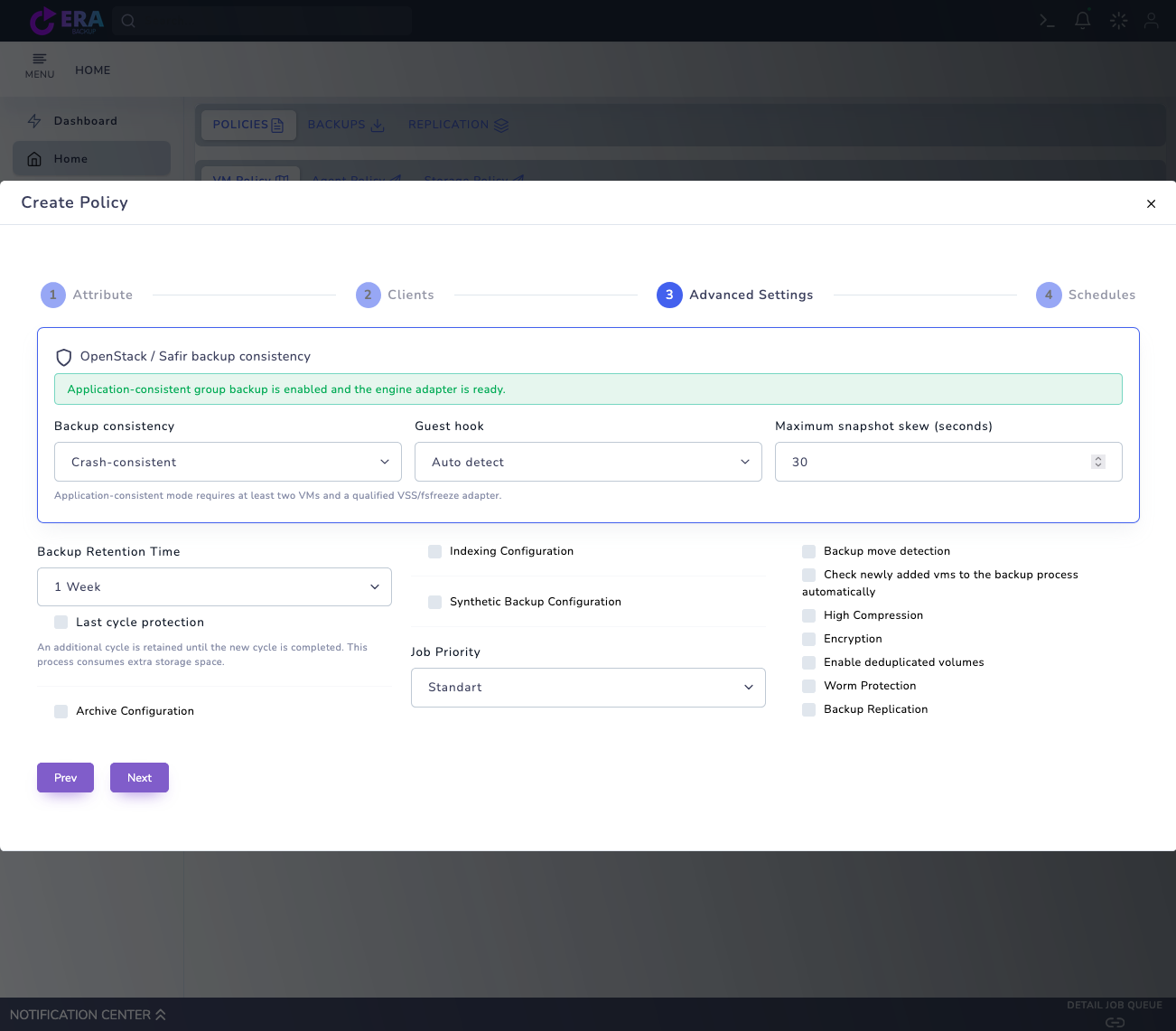
Match High Compression in VM/Agent Policy Advanced Settings or Compression in edit forms to the method. The inspected VM form submits a compression boolean; an algorithm/level field was not verified here. The real example is an earlier unsaved lab draft, not proof that compression was applied.
Earlier real VM Policy Advanced Settings screen: policy options including High Compression/deduplicated-volume fields. This is an unsaved lab draft, not proof of engine application, codec or savings ratio. Enlarge ↗
Expected result
Layer, data scope and measurement results are recorded.
04
4. Separate database and specialized data paths
The PostgreSQL method panel includes postgre_compress and plain-dump choices; these are not the same as generic VM compression. Validate selected dump format and restore-tool compatibility with the DBA. Windows deduplicated-volume optimization, encryption and WORM are not synonyms for compression.
Expected result
Layer, data scope and measurement results are recorded.
05
5. Compare CPU, network and capacity effects
Validate where compression runs and how new tasks apply it. Fewer transfer bytes do not guarantee shorter total duration; measure CPU, queues, I/O and network bottlenecks together. Do not assume policy changes recompress old backups or reclaim space immediately.
Expected result
Layer, data scope and measurement results are recorded.
06
6. Keep compression and deduplication ratios distinct
Use the same layer/units for source/output ratios. Do not report unique-chunk reuse, skipped zero blocks or incremental scope as compression savings. The BTRFS runbook says compressed-physical metrics may be empty/warned without compsize; missing metrics do not mean zero usage.
Expected result
Layer, data scope and measurement results are recorded.
07
7. Document restore compatibility and acceptance
In an approved test restore the selected method’s Full and required incrementals to an isolated destination. Compare hashes, file/database opening and application queries. Separately validate restore compatibility across releases. This inspection changed no compression, backend/mount parameters or existing data and started no backup/restore.
Expected result
Layer, data scope and measurement results are recorded.
COMMON QUESTIONS
Is there a fixed savings or speed ratio?
No. Measure against data, method, layer and resource cost; separately accept hashes/data and isolated restore.