DATA EFFICIENCY USER GUIDE

Deduplication.
Measure savings with data acceptance.

Assess deduplication layers, policy selections and measured data acceptance separately.

7 stepsTR / ENGo to steps ↓

BEFORE YOU BEGIN

Check before you begin

Deduplication, compression, incremental scope, encryption and WORM are different features. Visible options or PoC/development acceptance do not establish production readiness on every platform or fixed savings.

Screenshots were captured from the actual lab interface on 16 October 2026. The interface is in English; explanations follow your selected language. Resource names, dates and settings are examples; use values for your own environment.

Visual/action limit: the earlier real VM Advanced Settings image is reused unchanged; visible options are not runtime acceptance. No new Agent/backend measurement screen was captured. No dedup/compression setting, filesystem maintenance, chunk deletion or backup/restore was performed.

  • Platform, engine, backend and release identity
  • Representative data, Full/incremental and measurement layer
  • CPU/I/O/network cost and physical capacity
  • Hash and isolated-restore acceptance
01

1. Identify the deduplication layer

Backup-engine/repository chunk sharing, source Windows deduplicated-volume optimization and BTRFS extent dedup are different mechanisms. Record platform, method, backend and installed release. dd_dedup_poc is a proof of concept, not evidence of general production support or Data Domain equivalence.

Expected result

Layer, data scope and measurement results are recorded.

02

2. Prepare representative data and baseline measurements

Record a small representative dataset with repeated/changing blocks, logical bytes, physical usage, transferred bytes and duration. Compressed/encrypted data and zero blocks affect results. Compare ratios only with matching datasets, Full/incremental methods and measurement layers.

Expected result

Layer, data scope and measurement results are recorded.

03

3. Check the actual scope of policy options

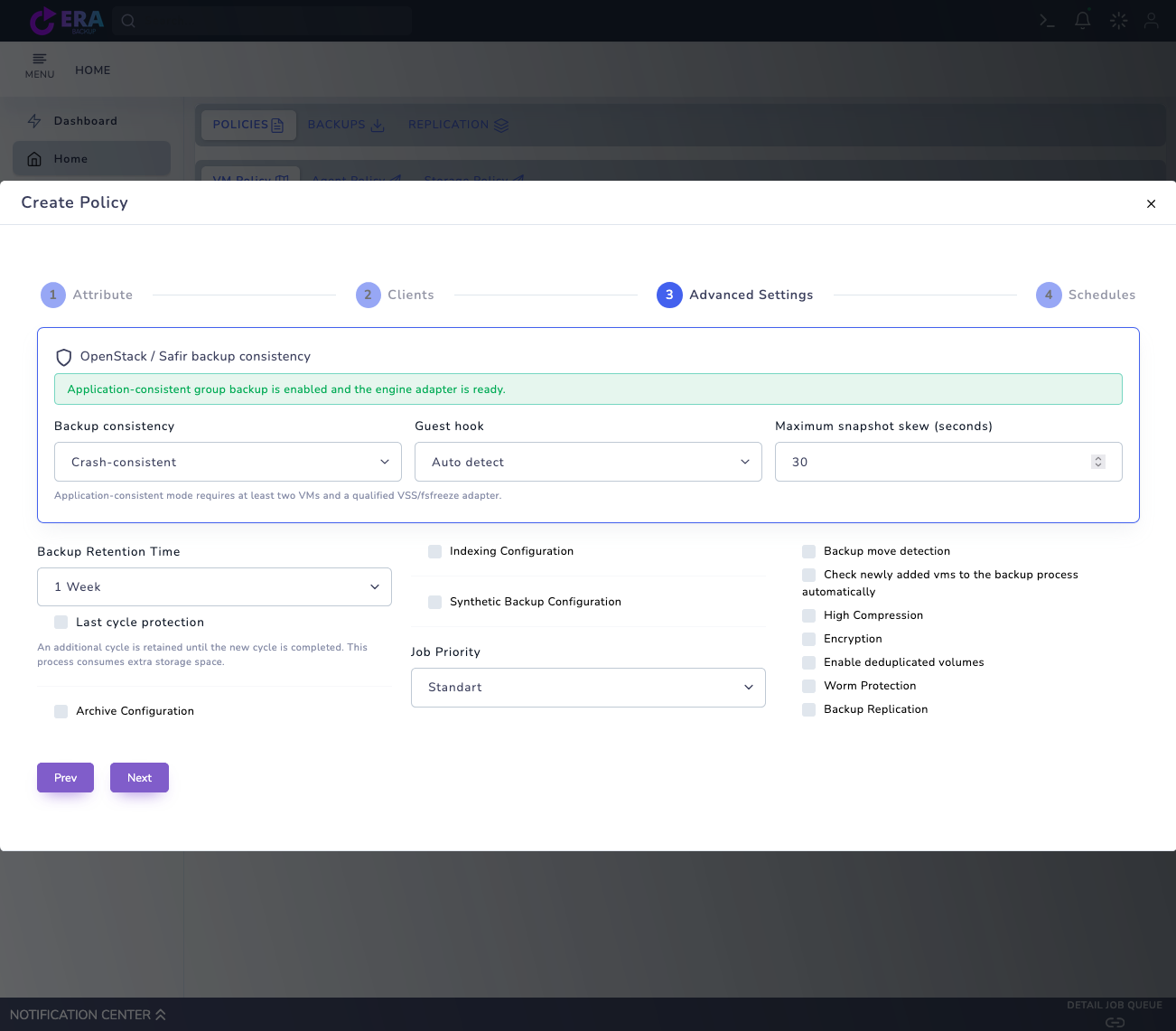
Distinguish VM Advanced Settings → Enable deduplicated volumes from agent Deduplication for File Backup and Enable optimized backup of windows deduplicated volumes. Fields may be hidden by source/method. A visible option does not establish global repository dedup for every platform; validate the installed backend and supported scope.

Real EraBackup Advanced Settings options screen
Earlier real VM Policy Advanced Settings screen: policy options including High Compression/deduplicated-volume fields. This is an unsaved lab draft, not proof of engine application, codec or savings ratio. Enlarge ↗
Expected result

Layer, data scope and measurement results are recorded.

04

4. Assess repository chains and chunk sharing

The RustFS native design describes content-addressed chunk sharing and reuse of unchanged chunks across Full/incremental backups; manifest integrity needs separate verification. Development round-trip acceptance does not clear all production gates. Never manually delete referenced chunks; assess retention/GC and encryption/dedup scope against the backend release.

Expected result

Layer, data scope and measurement results are recorded.

05

5. Keep BTRFS maintenance separate from backup

The BTRFS runbook’s erabackup_btrfs_dedup.py does not take backups; report, dry-run, dedup and verify are separate modes. Actual dedup can change extent sharing through duperemove; it is not a policy checkbox or read-only report. Do not run it in production without validating mounts, maintenance windows and restore acceptance.

Expected result

Layer, data scope and measurement results are recorded.

06

6. Measure ratios and resource cost together

Identify whether metrics represent logical, unique, physical or transferred bytes. Do not double-count transfer reduction, incremental scope and compression in the same saving ratio. Compare CPU, memory, I/O, duration and reservations; one lab result does not guarantee fixed savings or speed.

Expected result

Layer, data scope and measurement results are recorded.

07

7. Accept through Full/incremental restore

In an approved small test, create Full and changed-data incremental points and compare hashes/application acceptance after isolated restore. Include the oldest required chain and post-cleanup references in the test plan. This inspection enabled no dedup, ran no BTRFS maintenance and produced no backup/restore.

Expected result

Layer, data scope and measurement results are recorded.

COMMON QUESTIONS

Is there a fixed savings or speed ratio?

No. Measure against data, method, layer and resource cost; separately accept hashes/data and isolated restore.

STEP-BY-STEP GUIDES

From installation to recovery.

01

Installation Guide

Install EraBackup Master: operating system readiness, package integrity, terminal installer, TLS, licensing, repository and service validation.

Open guide
02

First Backup

Use EraBackup Create Policy to select source, storage, clients, retention and schedule, then validate the first full backup and recovery point.

Open guide
03

Restore

Select a recovery point in EraBackup, use the RESTORE wizard, review target mappings and Summary, and validate data in an isolated target.

Open guide
04

VMware Backup

Prepare VMware backup step by step, from vCenter connectivity and test VM selection to HotAdd prerequisites and the full/CBT chain.

Open guide
05

VMware Restore

Plan VMware recovery point selection, target vSphere resources and datastore checks, then validate recovery in a new isolated VM.

Open guide
06

OpenShift Backup

Plan OpenShift Virtualization/KubeVirt VM backups with namespace, CSI, RBAC and repository prerequisites; assess database profiles separately.

Open guide
07

OpenShift Restore

Plan the OpenShift recovery point, target namespace, new VM name and StorageClass; distinguish VM/PVC recovery from database restore.

Open guide
08

Database Backup

Prepare agent-based database policies and OpenShift PostgreSQL/MySQL logical streaming separately; check source, method, retention and initial backup acceptance.

Open guide
09

Database Restore

Prepare recovery point, target database, credential reference and final acceptance checks according to the engine and backup method.

Open guide
010

Exchange Backup

Prepare the Exchange agent, registered instance, database selection and backup acceptance plan. Check which release validates DAG, database and mailbox objectives.

Open guide
011

Exchange Restore

Inspect the Exchange catalog item, recovery point and mailbox selection screen; distinguish a UI preview from an actually completed recovery operation.

Open guide
012

Active Directory Backup

Prepare the AD agent, domain controller source, policy selection and catalog acceptance; distinguish object recovery from System State and forest recovery objectives.

Open guide
013

Active Directory Restore

Prepare the AD catalog point, object identity, attribute difference and scoped restore delegation; assess Recycle Bin and System State objectives separately.

Open guide
014

Kubernetes Backup Guide

Prepare EraBackup Kubernetes agent policies, PVC/Pod selection and node/control-plane methods for your distribution; plan catalog and isolated restore acceptance together.

Open guide
015

Kubernetes Restore Guide

Inspect Kubernetes catalog records, PVC targets and control-plane recovery limits separately; verify source/namespace mapping and application acceptance.

Open guide
016

Rancher Backup Preparation Guide

Separate Rancher local management, RKE2/K3s and downstream application scope; distinguish the EraBackup agent method from Rancher’s own backup operator.

Open guide
017

Rancher Restore Preparation Guide

Prepare separate source, target and acceptance checks for Rancher management restore, RKE2/K3s cluster recovery and downstream application recovery.

Open guide
018

OpenStack Backup

Prepare OpenStack backup from VM, Cinder disk, project and consistency profile through the Full/incremental chain.

Open guide
019

OpenStack Restore

Plan OpenStack VM restore with recovery point, disk chain, metadata and target project/network mappings.

Open guide
020

Safir Bulut Backup

Prepare Safir Bulut backup from VM, Cinder disk, project and consistency profile through the Full/incremental chain.

Open guide
021

Safir Bulut Restore

Plan Safir Bulut VM restore with recovery point, disk chain, metadata and target project/network mappings.

Open guide
022

Hyper-V Backup Guide

Prepare Hyper-V backup with source connection, VM/disk selection, retention and initial acceptance checks.

Open guide
023

Hyper-V Restore Guide

Plan recovery point, disk chain and Hyper-V targets within the scope exposed by the source template.

Open guide
024

Proxmox Backup Guide

Prepare Proxmox backup with source connection, VM/disk selection, retention and initial acceptance checks.

Open guide
025

Proxmox Restore Guide

Plan recovery point, disk chain and Proxmox targets within the scope exposed by the source template.

Open guide
026

KVM Backup Preparation Guide

KVM Backup Preparation Guide: assess releases, source access and validated target scope.

Open guide
027

KVM Restore Preparation Guide

KVM Restore Preparation Guide: assess releases, source access and validated target scope.

Open guide
028

Sangfor Backup Preparation Guide

Sangfor Backup Preparation Guide: assess releases, source access and validated target scope.

Open guide
029

Sangfor Restore Preparation Guide

Sangfor Restore Preparation Guide: assess releases, source access and validated target scope.

Open guide
030

Windows File Backup

Prepare file and folder selection, agent access, repository, retention and initial acceptance for Windows servers step by step.

Open guide
031

Windows File Restore

Prepare recovery points, file selection, target paths and data acceptance for Windows servers step by step.

Open guide
032

Linux File Backup

Prepare file and folder selection, agent access, repository, retention and initial acceptance for Linux servers step by step.

Open guide
033

Linux File Restore

Prepare recovery points, file selection, target paths and data acceptance for Linux servers step by step.

Open guide
034

Windows Bare Metal Image Backup

Prepare Windows Bare Metal image backup with agent access, disk scope, boot dependencies and a recovery test.

Open guide
035

Windows Bare Metal Image Restore

Prepare Windows Bare Metal image recovery points, destination disks, recovery environment and boot/data acceptance.

Open guide
036

Linux Bare Metal Image Backup

Prepare Linux Bare Metal image backup with agent access, disk scope, boot dependencies and a recovery test.

Open guide
037

Linux Bare Metal Image Restore

Prepare Linux Bare Metal image recovery points, destination disks, recovery environment and boot/data acceptance.

Open guide
038

Replication Guide

Prepare replication acceptance with site mappings, the first Full seed, incremental generations and a verified checkpoint.

Open guide
039

Disaster Recovery Guide

Prepare service recovery with checkpoint selection, isolated testing, fencing, controlled failover and failback planning.

Open guide
040

NAS Backup

Prepare source/destination roles, Storage Policy scope and data acceptance for NAS.

Open guide
041

NAS Restore

Prepare catalogs, recovery chains, destination effects and file acceptance for NAS.

Open guide
042

S3-Compatible Object Storage Backup

Prepare source/destination roles, Storage Policy scope and data acceptance for S3-Compatible Object Storage.

Open guide
043

S3-Compatible Object Storage Restore

Prepare catalogs, recovery chains, destination effects and file acceptance for S3-Compatible Object Storage.

Open guide
044

SQL Server Backup

Prepare SQL Server agent access, instance/database selection, method and initial backup acceptance.

Open guide
045

SQL Server Restore

Prepare SQL Server recovery points, chains, destination instances and application acceptance step by step.

Open guide
046

Oracle Backup

Prepare Oracle agent access, instance/database selection, method and initial backup acceptance.

Open guide
047

Oracle Restore

Prepare Oracle recovery points, chains, destination instances and application acceptance step by step.

Open guide
048

PostgreSQL Backup

Validate PostgreSQL methods, instance/database scope and initial data acceptance.

Open guide
049

PostgreSQL Restore

Validate PostgreSQL methods, instance/database scope and destination chains.

Open guide
050

MySQL Backup

Validate MySQL methods, instance/database scope and initial data acceptance.

Open guide
051

MySQL Restore

Validate MySQL methods, instance/database scope and destination chains.

Open guide
052

MariaDB Backup

Prepare MariaDB instances, methods, data scope and initial acceptance.

Open guide
053

MariaDB Restore

Prepare MariaDB recovery points, log chains and validated destination effects.

Open guide
054

MongoDB Backup

Prepare MongoDB instances, methods, data scope and initial acceptance.

Open guide
055

MongoDB Restore

Prepare MongoDB recovery points, log chains and validated destination effects.

Open guide
056

DB2 Backup

Prepare DB2 instance, database/tablespace, methods and initial backup acceptance.

Open guide
057

DB2 Restore

Prepare DB2 instance, database/tablespace, recovery chains and destination acceptance.

Open guide
058

Repository Installation Guide

Use repository identity, HTTPS access, capacity and verified data acceptance to prepare installation.

Open guide
059

Storage Management Guide

Use repository identity, HTTPS access, capacity and verified data acceptance to manage storage operations.

Open guide
060

Monitoring Guide

Prepare scope, state verification and operational acceptance for monitoring step by step.

Open guide
061

Reporting Guide

Prepare scope, state verification and operational acceptance for reporting step by step.

Open guide
062

Notification Management Guide

Prepare scope, state verification and operational acceptance for notification management step by step.

Open guide
063

User Management Guide

Validate identity, role/group and tenant/resource boundaries for user management.

Open guide
064

Role Management Guide

Validate identity, role/group and tenant/resource boundaries for role management.

Open guide
065

Permission Management Guide

Validate identity, role/group and tenant/resource boundaries for permission management.

Open guide
066

LDAP / Active Directory Integration Guide

Validate LDAP connectivity, directory users and tenant/role mappings separately.

Open guide
067

Two-Factor Authentication Guide

Assess email OTP, expiry and sign-in-path exceptions through an acceptance plan.

Open guide
068

Troubleshooting Guide

Assess symptoms, job identity, services and data acceptance step by step to diagnose issues.

Open guide
069

Log Analysis Guide

Assess symptoms, job identity, services and data acceptance using timelines and redacted logs.

Open guide
070

License Management Guide

Prepare identity, package/scope and post-action acceptance for license management.

Open guide
071

Version Upgrade Guide

Prepare identity, package/scope and post-action acceptance for version upgrade.

Open guide
072

Backup Scheduling Guide

Plan source, method, capacity and data acceptance together for backup scheduling.

Open guide
073

Retention Policies Guide

Plan source, method, capacity and data acceptance together for retention policies.

Open guide
074

Deduplication Guide

Assess deduplication layers, policy selections and measured data acceptance separately.

Open guide
075

Compression Guide

Assess compression layers, policy selections and measured data acceptance separately.

Open guide
076

Encryption Guide

Assess encryption layers, release support, key ownership and restore acceptance step by step.

Open guide
077

WORM Protection Guide

Validate the WORM option, repository requirements, protection period and catalog evidence separately.

Open guide
078

Backup Validation Guide

Assess job records, recovery chains and isolated restores using measurable acceptance steps.

Open guide
079

Integrity Check Guide

Review hash comparisons, repository chains and backend verification limits step by step.

Open guide
080

Bandwidth Management Guide

Manage transfer scheduling, concurrency and network impact through measurable steps.

Open guide
081

Performance Optimization Guide

Assess source, network, repository and concurrency effects through controlled comparisons.

Open guide
082

Agent Installation Guide

Prepare Windows and Linux components, secure enrollment requirements and initial connectivity acceptance step by step.

Open guide
083

Agent Management Guide

Manage agent inventory, connectivity health, updates and retirement conditions through controlled steps.

Open guide
084

API Usage Guide

Prepare integration requirements, the support process and secure test acceptance without exposing technical secrets.

Open guide
085

Automation Guide

Combine scheduled jobs, error behavior, monitoring and rollback in a secure automation plan.

Open guide
086

Audit Records Guide

Prepare event scope, time correlation and secure evidence sharing step by step.

Open guide
087

Security Management Guide

Assess access, updates, data protection and incident handling without publishing sensitive configuration.

Open guide
088

Multi-Site Guide

Plan site roles, data copies, connectivity impact and recovery acceptance through controlled steps.

Open guide
089

Centralized Management Guide

Assess inventory, access boundaries, job tracking and centralized operational acceptance step by step.

Open guide
090

Archiving Guide

Assess archival needs, target support, data scope and recovery requirements step by step.

Open guide
091

Long-Term Retention Guide

Plan retention needs, chain dependencies, continued access and periodic recovery acceptance.

Open guide
092

Multi-Tenancy Guide

Assess tenant separation, resource ownership and access boundaries through controlled acceptance.

Open guide
093

Tenant Management Guide

Plan tenant onboarding, user/resource mappings and retirement acceptance safely.

Open guide
094

Capacity Planning Guide

Assess data volume, change rate, retention chains and safe capacity headroom together.

Open guide
095

Scaling Guide

Measure storage and processing load separately to prepare supported expansion and acceptance plans.

Open guide
096

High Availability Guide

Assess service dependencies, support scope and controlled failover acceptance separately.

Open guide
097

Load Balancing Guide

Assess access traffic, health checks and job concurrency against the supported architecture.

Open guide

TALK TO THE TECHNICAL TEAM

Let’s validate your data-efficiency scope together.

Share your workloads and recovery objectives. Let’s define the technical scope together.

Technical Discussion

MEET ERABACKUP

Let’s assess your infrastructure.

Share your workloads to start a demo and technical scope discussion.

Your information is processed to assess your request. Read our privacy notice.

Google reCAPTCHA helps prevent spam. Google’s Privacy Policy and Terms of Service apply.